Self-paced Mini Course

Don't Skip My
Prologue!

Strategies to hook readers in your first 10 pages.

Enroll for $24 Watch the first module free
One-time payment for 12-month access.
Nicole Wilbur

A writer realizing she is
not the main character

"Don't skip my prologue!" the author calls in agony.
"But if they just got to page 11..." they cry.

Starting our story strong isn't about us.
It's about our reader.

In this course, we use recent bestsellers as our guide to write an opening that demands to be read.

I'm a writer who transformed my opening from "it's good" to "I literally can't put it down." This is what worked for me, and if you're in, I'm here to help you tell your story.

I haven't written my opening yet
I'm editing my opening

Past students say...

"I learned more practical knowledge in these past few hours than I have from several Masterclasses."
★★★★★

" Don't Skip My Prologue! helped me put structure to the otherwise overwhelming task of writing an opening for my novel. Nicole breaks down theory into easy-to-follow modules. She cleverly uses supporting examples from modern day books to apply the theory, as well as a working example where you write an opening to a book together.

I knew what a good opening to a book was supposed to feel like. Nicole was able to give me the vocabulary to create those feelings for readers.

There are many ways to write an opening and now I have the levers to pull to make those unique and decide which direction I want to go in. Suspense, reader orientation, character decisions, scene selection -- there's so much to think about but it's exciting because now I have the tools.

I feel more motivated than ever to keep writing my opening."

— Chris D., writing his first book
★★★★★

"Nicole is a great teacher! This class has so much valuable information, and I really appreciate her enthusiasm throughout it.

Using reader expectation as the framework for exploring each of the subsequent concepts was gold. There is so much great material and I was so excited at my first lightbulb moment!

I learned more practical knowledge in these past few hours than I have from several Masterclasses."

— Sitara A., MFA (writing) student
★★★★★

"My name is Zoë, I'm at the beginning stages of writing my first novel, having outlined and started writing the first few chapters. Don't skip my prologue helped me decide to actually write a prologue.

Initially, I wasn't sure if I was going to include one [...] after completing the course and realizing that a prologue is my opportunity to give readers more insight into the overall story (I'm doing a series), I decided to work it in.

A specific part of the "Don't skip my prologue" course that I liked was the Great Database of Novel Openings because it helped me better understand how I can create a moment where the main character has to make a difficult decision in the first scene that helps readers understand the type of person that they are.

Overall, I'd strongly recommend the course and I look forward to referencing it throughout my writing journey!"

— Zoe E., starting her novel.
What you get

What's included

  • 55 lessons on writing a strong opening
  • 4+ hours of video content
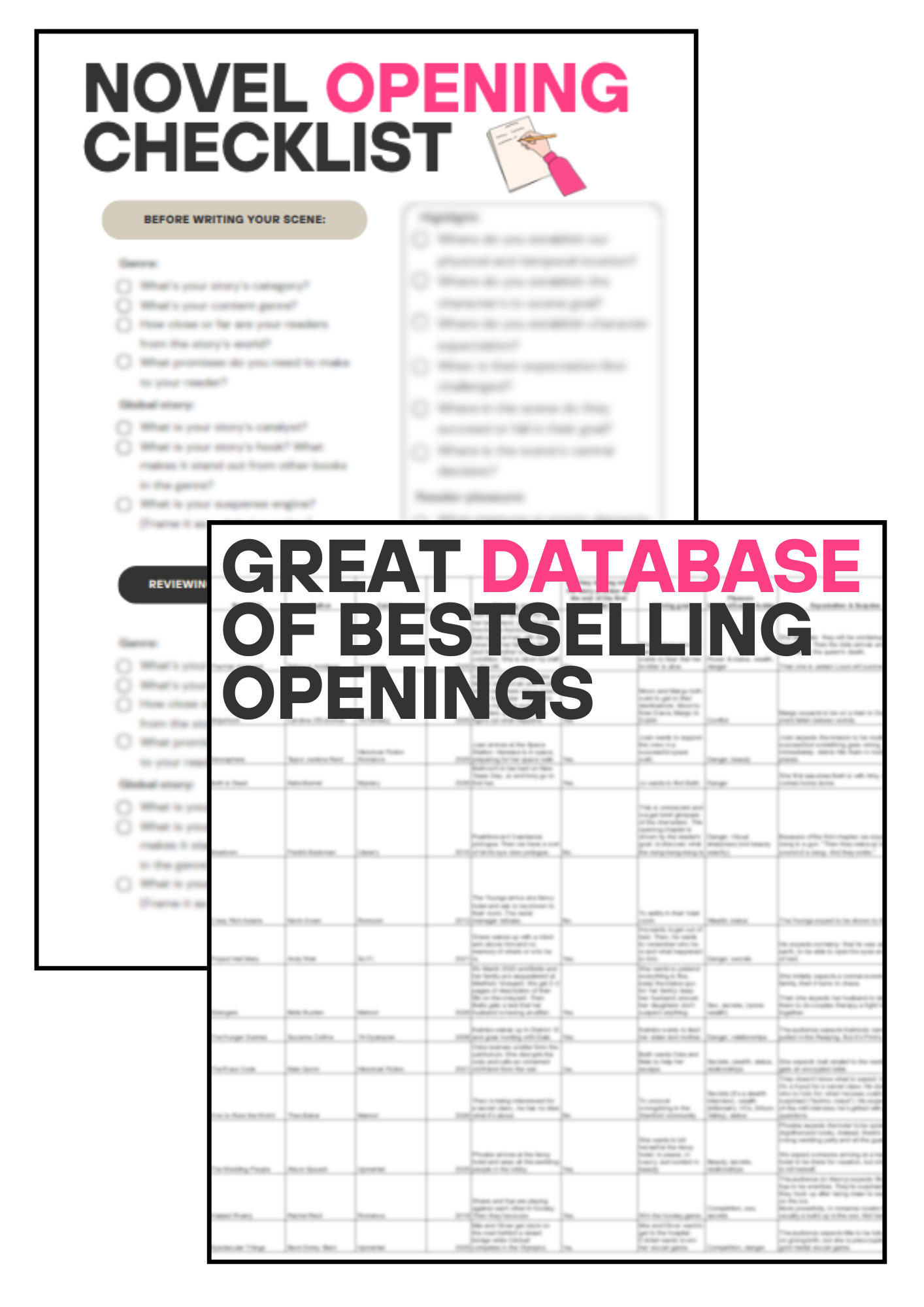
  • The Great DB of Bestselling OpeningsA sheet analyzing the openings of 25 bestselling books from Upmarket to Sci Fi to Memoir.
  • A 1-page novel opening checklist
  • Extra reading & resource recommendationsExtra books, articles, videos, and frameworks that helped me.
  • A worked example following the processWe'll design and write an opening for a new novel together.
Course photo placeholder
"The balance of theory, study of modern books, and worked ice skating example felt engaging, clever, and applied." -Past student
Start now
Nicole Wilbur

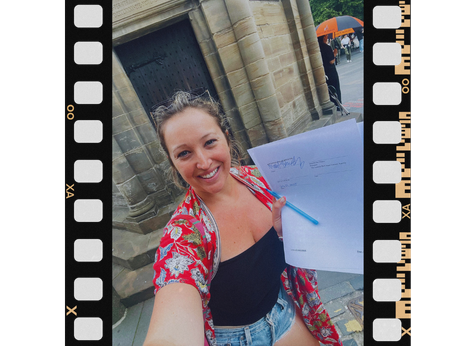
Me (somewhat dramatically) signing my agent contract at the Writer's Museum in Edinburgh

Your mentor

Hi, I'm Nicole.

I'm an emerging author, writing mentor, and "story theory sommelier" — i.e. I pair writers with story tools to write a stronger book. (Yes, I did make this up. A girl has to marry her love of wine and story somehow).

I've spent years obsessively studying what makes novel openings work—reading breakout debuts, reverse-engineering first chapters, and applying everything to my own manuscript. That manuscript got me an agent.

This course is everything I would tell Me-Of-5-Years-Ago if I could take her out for a (very long and slideshow-supplemented) lunch. I hope you have as much fun watching it as I did creating it!

2.1 Choosing an Opening Moment

Watch a sample lesson


FAQ

Who is this course for?
This course is for any writer wanting to write or strengthen their opening! It works if you haven't written a word in your novel or if you've rewritten it 75 times.

If you are completely new to writing and storytelling, however, I would suggest watching some videos on story theory or reading a book such as Save the Cat Writes a Novel by Jessica Brody, The Anatomy of Story by John Truby, or Story Engineering by Larry Brooks to learn some of the basics.
What genre does this work for?
Generally, these strategies could apply to any novel. They may lean more commercial than literary and you can see the list of books used as examples under the relevant FAQ. I personally write Young Adult, action/adventure, mystery/thriller, and romance. I read a lot of Upmarket/Book Club. There is also a memoir example as the best memoirs read like fiction: however, this course is not suited to any other type of non-fiction.
Do I need any prerequisites?
No! However, I do reference story frameworks like Save the Cat. In the course, I'll provide resource links for anything that might be new to you.
What are the examples? (Book list)
We'll be using the following books as our primary references. I strove to balance recent successful books, debuts, and stories that would be familiar to a majority of writers, as well as capture a wide variety of genres.

There's no need to read all (or any!) of these openings. However, you might choose to download the free eBook sample of one or two close to the genre in which you intend to write.

  • The Heir Apparent by Rebecca Armitage – Book Club, 2025, Debut
  • Skipshock by Caroline O’Donoghue – YA Fantasy, 2025
  • Atmosphere by Taylor Jenkins Reid – Women’s fiction, 2025
  • Project Hail Mary by Andy Weir – Science fiction, 2022
  • Beartown by Fredrik Backman – Literary fiction, 2016
  • Beth is Dead by Katie Bernet – YA thriller, 2026, Debut
  • Crazy Rich Asians by Kevin Kwan – Romcom, 2013, Debut
  • Strangers by Belle Burden – Memoir, 2026, Debut
  • The Hunger Games by Suzanne Collins – YA Dystopian, 2008, Debut
  • The Rose Code by Kate Quinn – Historical Fiction, 2021
  • Will this course help me get an agent? Or X sales?
    Maybe. Maybe not. A lot more goes into a good book (let alone securing representation or making sales) than what you'll find in this course.

    My goal is to provide you with tools and strategies you can use to strengthen your opening. Some will resonate with you, some won't. And that's okay. There are many theories I've heard about, disregarded, and revisited years later. It's helpful to have them in your toolbox.

    Right, you asked about getting an agent? If this course gives you even one 'aha' moment on how to strengthen your opening, that will of course help you strengthen your submission package. But I don't claim to know the secret magic bullet to anything in publishing. Sorry! :)
    Who are you, anyway?
    I'm an emerging author just like you. Full disclosure: I do not work in publishing and you won't find my books on shelves (yet, fingers crossed!). If you only want to learn from a publishing professional, please DO NOT take this course.

    While I did go through the query process and secure representation, I'm most proud of how the comments of beta readers, freelance editors and even my best friend evolved as I learned how to write an effective opening: from lukewarm 'oh that's nice' to 'oh shit. This is good. I want to keep reading. Don't change anything.'

    I personally learn best from people who are a few steps ahead of me, who have just recently learned how to do the thing I want to do. That's why I say 'writing mentor.' I'm here to share what I've learned and what's worked for me. BUT I'm also very academic by nature: I like analysis and case studies. So, I've also studied many bestsellers, identified patterns and formed some theory around them.

    Let's be real: this is not magic. You can find most of this information elsewhere. But what this course does is bring it all together (saving you time), illustrate it with recent books (making it real), and applying it immediately both in a worked example and in steps you can follow to write your own opening (making it yours).
    What will I have at the end?
    The course has optional "your turn!" checkpoints throughout with opportunities to apply the course material to your novel. If you follow them, you will write two opening scenes for your book, and then revise at least one of them. When you're finished, you should have the second draft of an opening scene you're excited about!
    What's your AI policy?
    This course: No part of this course or its content was generated, edited with, or touched by AI in any way. The sole exception being the platform I use to host the course (Embedin) appears to generate AI timestamps on the videos automatically. There was not an option to opt out of this.

    Your writing: I strongly discourage you from using AI in your writing, including any writing done as part of this course. I always refer people to the wonderful Kieren Westwood's videos on this, which get to the heart of why you should not use AI: https://www.youtube.com/watch?v=OHUJCHkaeKc&pp=ygUSa2llcmVuIHdlc3R3b29kIGFp

    If you choose to add-on the feedback option, please do NOT send any work that has been generated by, assisted by, or edited by Large Language Models (AI)

    Ready to tell your story?

    $24
    Enroll Watch the first module free